
The World Health Organisation state we need safe and nutritious food for the promotion of good health. They also say, on an annual basis, contaminated food will cause illness for 1 in 9 people worldwide and almost 1.52 million people will die because of this contamination1.
Food Safety in the UK
To safeguard the population of the UK from food contamination, the Food Standards Agency (FSA) oversees food safety, food regulations and food recalls for England, Wales and Northern Ireland2. In Scotland, food safety and standards are handled by an independent public body called Food Standards Scotland (FSS)3.
The FSA, an independent, non-ministerial, central government body, was established by the Food Standards Act in 19992, in the wake of several high-profile outbreaks of foodborne illness.
Prior to this, food safety was the responsibility of the Ministry of Agriculture, Fisheries and Food. However, reports – such as by Professor Philip James – criticised the fundamental conflict of interest for one government department to both promote the economic interests of UK farming and the food industry, whilst at the same time, policing food safety4.
A case in point was a new variant of Creutzfeldt-Jakob disease (CJD). Mainly affecting people over 60 years of age, CJD is a rare, rapidly progressing fatal brain disorder caused by abnormal, infectious protein particles known as prions. However, the 10 cases reported in 1996 were much younger with atypical symptoms. The conclusion was it was highly likely this new variant of CJD had arisen through exposure to beef from cows infected with Bovine Spongiform Encephalitis (BSE)5. The UK’s major BSE outbreak in the mid 1980s, led to the culling of over 4 million cattle and a worldwide ban on beef exports from the UK. As of January 2025, 178 people in the UK have died from new variant CJD6.
The Food Safety Act of 1990 is the primary legislation which makes the production and sale of unsafe or falsely described food an offence7. The act sets out the objectives, powers and duties of the FSA2, implemented through local authorities, Environmental Health Officers (EHOs), and court prosecutions.
Check out the latest food alerts and product recalls from the FSA here
Recent major food contamination incidents and product recalls in the UK include…
October 2026 – Pistachio nuts contaminated with Salmonella. Affected products included items from Marks and Spencer (M&S) and Tesco ready to eat ranges, for example M&S Nutty Wholefood Salad with Soy and Ginger Dressing.
October 2026 – Allergens undeclared on the labelling of Lambertz Cookies. The German confectionary company famous for their seasonal holiday cookies, were forced to recall cookies where specific allergens were missing from English language labels.
September 2026 – Black olives contaminated with Listeria. This was revealed during routine testing by both Waitrose and Sainsbury.
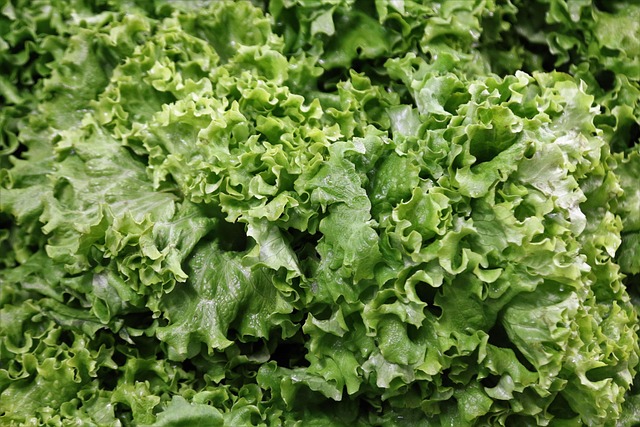
May to November 2024 – A major contamination of salad leaves by Shiga-toxin producing E. coli (STEC) occurred8. This group of bacteria have the potential to cause severe gastrointestinal illness which can be fatal. The suspected vehicle was pre-packaged supermarket sandwiches, wraps, and salads containing leaf lettuce distributed across major UK chains including Aldi, Amazon, Asda, Boots, Co-op, Morrisons and Sainsbury’s9.
This paper10 highlights how the outbreak unfolded and what subsequent actions were taken to contain it. A few of the key dates are identified below:
24 May 2024 – Public health agencies and testing laboratories in the UK noted an increased number of stool specimens testing positive for STEC. Presumed cases of STEC are notifiable11 and reported directly to public health management who then collect detailed clinical and epidemiological data from those affected, for example symptoms, travel, food, and animal exposure.
9 June 2024 – Analysis of data collected by UK Health and Security Agency’s National Enhanced STEC Surveillance System pointed to pre-packed sandwiches, containing lettuce, as the vehicle of contamination.
Food chain investigations identified both the sandwich producer and the source of the lettuce.
13 and 15 June 2024 – Sandwiches and wraps from the producer/supplier were recalled due to potential contamination with E. coli9.
2 July 2024 – Dispersal of the 288 cases linked to the outbreak was UK wide,10% of whom needed emergency hospital care. The majority of those affected reported symptoms of bloody diarrhoea, with 9 people suffering from haemolytic uraemic syndrome, a rare life-threatening condition causing acute injury to the kidneys. Two of these people unfortunately died.
Food safety regulation in the UK
The following guidance is provided by the FSA for anyone running a food business:
If you sell, cook, store, handle, prepare or distribute food you must…
- Register the business with the local authority
- Make sure the food is safe and handled safely
- Train staff in food safety and personal hygiene
- Pertaining to the food, manage the risk of allergens, chemical/physical hazards and microbiological hazards
- Label, advertise and market the food accurately
- Maintain traceability records* of your suppliers and businesses you supply – names and addresses, types and quantities of products, transaction and delivery dates
- Withdraw/recall unsafe food
*Traceability records will have been key to identifying the source of the UK STEC outbreak in May 2024.
One of the roles of the UK Health and Security Agency is to investigate human disease outbreaks caused by pathogens transmitted through food. Quoted here in July 2026 they say ‘salad leaves, fresh produce and beef continue to be an important source of STEC outbreaks and specific interventions targeting these food products are important to prevent further outbreaks’12.
Food safety in the home
We must not be complacent in the home either. Here is a useful guide from the US Government who advise sticking to the four C’s…
- Clean – keeps hands, utensils and surfaces clean
- Cross contamination is to be avoided – use separate utensils for meat, poultry, vegetables, seafood, eggs
- Cook to right temperature – whether you are cooking on a hob, in the oven, in a microwave, or on the barbeque. Use a food thermometer if necessary.
- Chill – refrigerate and freeze food at the correct temperature and within the correct time limits, e.g. cool and refrigerate leftovers promptly.
References
- World Health Organisation. 2026. Food Safety [Fact Sheet]. https://www.who.int/news-room/fact-sheets/detail/food-safety
- Food Standards Agency. About Us – Food Standards Agency. Available at: https://www.gov.uk/government/organisations/food-standards-agency/about (Accessed: 19 October 2026)
- Food Standards Scotland. Our remit. Available at: https://www.foodstandards.gov.scot/about-us/who-we-are/our-remit (Accessed 19 October 2026)
- Parliament (1998) Select Committee on Agriculture Fourth Report. The origins of the FSA: the James Report. London: House of Commons. Available at: https://publications.parliament.uk/pa/cm199798/cmselect/cmagric/331iv/ag0408.htm (Accessed 20 October 2026)
- Ritchie D L, Peden A H, Barria M A. (2021) Variant CJD: Reflections a Quarter of a Century on. Pathogens. 2021 Oct 30;10(11):1413. doi: 10.3390/pathogens10111413
- Creutzfeldt-Jakob Disease in the UK (By Calendar Year) Available at: https://cjd.ed.ac.uk/sites/default/files/2025-01/Latest%20NCJDRSU%20CJD%20Monthly%20Statistics.pdf (Accessed 20 October 2026)
- UK Public General Acts. Food Safety Act 1990. Available at: https://www.legislation.gov.uk/ukpga/1990/16/contents (Accessed 19 October 2026)
- UK Health and Security Agency (2026) Shiga-toxin producing Escherichia coli (STEC) data: 2024. Available at: https://www.gov.uk/government/publications/escherichia-coli-e-coli-o157-annual-totals/shiga-toxin-producing-escherichia-coli-stec-data-2024#main-points-for-2024 (Accessed: 18 October 2026).
- Food Standards Agency (2026) Greencore Group recalls sandwiches, wraps and salads because of possible contamination with E, coli. Available at: https://alerts.food.gov.uk/news-alerts/alert/FSA-PRIN-30-2024(Accessed: 18 October 2026)
- Quinn O., et al. (2024) National outbreak of Shiga toxin-producingEscherichia coli O145:H28 associated with pre-packed sandwiches, United Kingdom, May-June 2024. Epidemiology & Infection. 2024 Dec 27;152:e179. doi: 10.1017/S0950268824001729
- UK Health and Security Agency (2026) Shiga-toxin producing Escherichia coli (STEC) data: 2024. Available at: https://www.gov.uk/government/publications/escherichia-coli-e-coli-o157-annual-totals/shiga-toxin-producing-escherichia-coli-stec-data-2024#methods (Accessed 22 October 2026)
- UK Health and Security Agency (2026) Shiga-toxin producing Escherichia coli (STEC) data: 2024. Available at: https://www.gov.uk/government/publications/escherichia-coli-e-coli-o157-annual-totals/shiga-toxin-producing-escherichia-coli-stec-data-2024#conclusions (Accessed 22 October 2026)
